
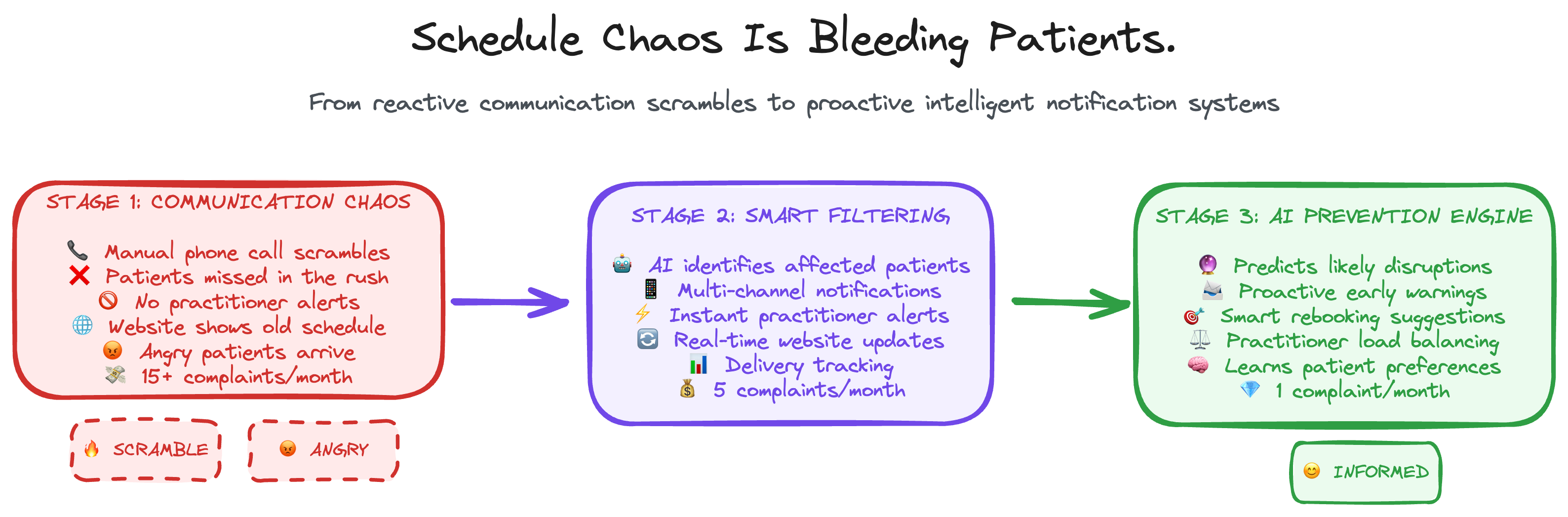
The Evolution Journey
From manual processes to intelligent automation, in three stages.
1
Manual Scheduling Conflicts
- Time-consuming manual schedule creation and adjustments
- Frequent conflicts between practitioner availability and patient needs
- Suboptimal resource allocation leading to capacity gaps
- Last-minute schedule changes causing disruption
- No consideration of practitioner skill matching with patient needs
2
Automated Schedule Management
- Automated schedule generation based on availability and patient demand
- Real-time conflict detection and resolution suggestions
- Integration with practitioner calendars and availability preferences
- Automated notification of schedule changes to all affected parties
- Basic skill matching for appointment type optimization
3
AI-Driven Workforce Optimization
- Machine learning predicts optimal staffing patterns
- Dynamic schedule adjustment based on real-time demand patterns
- Advanced skill matching considering practitioner expertise and patient needs
- Predictive analytics for capacity planning and hiring decisions
- Automated load balancing to prevent practitioner burnout
Key Benefits
Significantly reduced time spent on schedule management
Better resource utilization and reduced capacity gaps
Improved staff satisfaction through optimized workload distribution
Enhanced patient access through better appointment availability