
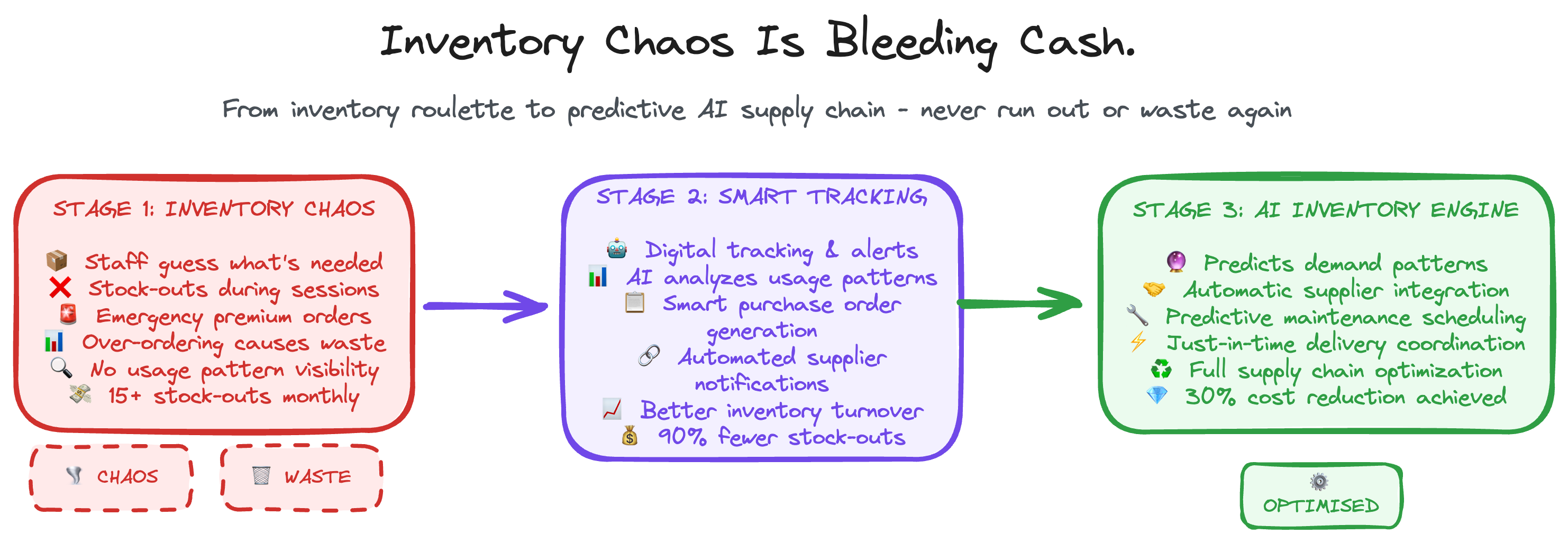
The Evolution Journey
From manual processes to intelligent automation, in three stages.
1
Manual Stock Management
- Manual counting and tracking of inventory levels
- Unexpected stockouts disrupting patient treatments
- Over-ordering leading to expired supplies and waste
- Time-consuming manual reorder processes
- No systematic tracking of usage patterns
2
Automated Inventory Monitoring
- Digital tracking of stock levels and usage rates
- Automated reorder alerts when supplies reach minimum levels
- Integration with supplier systems for easy reordering
- Expiry date tracking and waste reduction alerts
- Basic reporting on inventory costs and usage trends
3
Predictive Supply Management
- AI predicts optimal stock levels based on historical usage
- Seasonal demand forecasting for better planning
- Automated purchasing with dynamic supplier selection
- Integration with treatment schedules for demand prediction
- Cost optimization through bulk purchasing and supplier negotiation
Key Benefits
Eliminated stockouts ensuring uninterrupted patient care
Reduced waste through optimized ordering and expiry tracking
Significant time savings on inventory management tasks
Better cash flow through optimized inventory investment